Veneers in Waukegan, IL
Many Waukegan patients ask the same question before moving forward with veneers. They want to know what happens to your real teeth when getting veneers in Waukegan. It is a smart question, and the answer matters for your long-term oral health. Understanding each step helps you make a confident, informed decision.
Veneers are thin porcelain shells bonded to the front of your natural teeth. They improve color, shape, and overall appearance. But the process involves permanent changes to your enamel. Dr. Cheska Avery at Avery Family Dentistry walks every patient through exactly what to expect before any work begins.
What Happens to Your Real Teeth When Getting Veneers Waukegan: The Consultation
The veneer journey starts with a thorough consultation. Dr. Avery examines your teeth, gums, and bite during this visit. She checks for any underlying issues that could affect your results. Healthy teeth and gums are essential before veneers can proceed.
During this appointment, Dr. Avery also discusses your smile goals. She reviews shade options, tooth shape preferences, and how many veneers you need. Digital imaging or study models may be used. This gives you a realistic preview of your final outcome.
Good oral health is the foundation of a successful veneer treatment. Patients who need Dental Cleanings or other preparatory care will complete those first. This ensures your mouth is in its best condition before enamel preparation begins. Skipping this step can compromise your long-term results.
Enamel Removal: The Most Important Step to Understand
This is the step that most patients want to know about. To place veneers, a small amount of enamel must be removed from each tooth. This process is called tooth preparation. It creates space so the veneer sits flush and looks natural.
The amount of enamel removed is very small — typically between 0.3 and 0.5 millimeters. That is roughly the thickness of a contact lens. However, enamel does not grow back. This is why veneers are considered an irreversible procedure.
Here is what the enamel preparation process involves:
- A local anesthetic is applied to keep you comfortable throughout
- Dr. Avery uses a small dental drill to gently reshape the front surface
- The amount removed is carefully controlled to preserve as much tooth structure as possible
- Impressions or digital scans are taken after preparation is complete
- These records are sent to a dental lab to fabricate your custom veneers
The tooth preparation step is precise and methodical. Dr. Avery takes great care to remove only what is necessary. Her goal is to protect your natural tooth structure as much as possible. Patients are kept fully informed and comfortable at every stage.
The Temporary Phase: Protecting Your Teeth Between Appointments
After enamel preparation, your teeth are more sensitive and exposed. Dr. Avery places temporary veneers to protect them while your permanent ones are being made. Temporaries are not as durable as your final veneers. They are designed to last for one to three weeks.
You will want to be gentle during this phase. Avoid hard, crunchy, or sticky foods while wearing temporaries. Brush and floss carefully around them each day. Minor sensitivity to temperature is normal during this period.
Temporaries also give you a preview of your new smile. You can evaluate the shape and length before your final veneers are placed. If adjustments are needed, Dr. Avery can communicate those changes to the dental lab. This ensures your permanent veneers meet your expectations.
Children and teens in the practice may also benefit from protective dental treatments during this time. For example, Dental Sealants are commonly recommended for younger patients to protect their natural enamel. While sealants are unrelated to veneers, the principle is similar — protecting tooth structure matters at every age.
Shade Selection: Choosing the Right Color for Your Smile
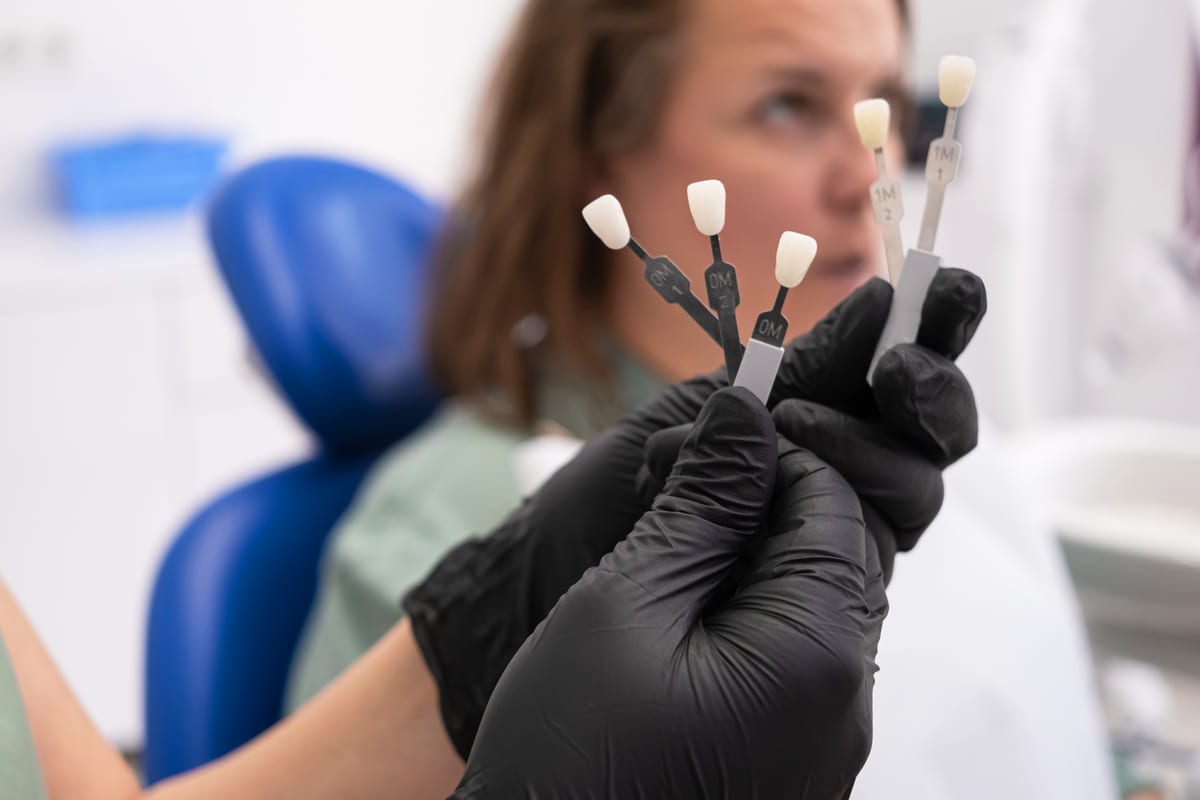
Shade selection is one of the most exciting parts of the veneer process. You work directly with Dr. Avery to choose a porcelain color that complements your skin tone and facial features. There is no single right answer — this is a personal and aesthetic decision. Most patients choose a shade that looks natural but noticeably brighter than their current teeth.
Here are some key factors that guide shade selection:
- Your natural skin tone and undertones
- The shade of your surrounding teeth that will not receive veneers
- How white you want your final smile to appear
- The shape and size of the veneer relative to your face
- Lighting conditions, since teeth can appear different in natural versus artificial light
Porcelain veneers are custom-tinted to match your chosen shade. The lab creates them using high-quality ceramic materials. Once fabricated, the color cannot be changed. This is why taking time during shade selection is so important.
Final Bonding: Placing Your Permanent Veneers
When your permanent veneers arrive from the lab, you return for the bonding appointment. Dr. Avery first places each veneer on the tooth without adhesive. This is a trial fitting to check shape, color, and bite alignment. Any minor adjustments are made at this stage before permanent bonding.
Once the fit is confirmed, the tooth surface is cleaned and prepared with a mild etching solution. This creates a slightly rough texture that helps the adhesive bond securely. A special dental cement is then applied to the back of the veneer. Dr. Avery carefully positions each one and uses a curing light to harden the bond instantly.
Excess cement is removed and your bite is checked once more. The entire bonding appointment typically takes one to two hours. You leave with a fully transformed smile that same day. Post-care instructions are provided to help you maintain your veneers long-term.
Caring for Your Teeth After Getting Veneers in Waukegan
Veneers are durable, but they still require proper care. Brush twice daily with a non-abrasive toothpaste. Floss gently around each veneer every day. Avoid using your teeth as tools to open packages or bite hard objects.
Regular dental visits remain important after veneers are placed. Routine checkups allow Dr. Avery to monitor the integrity of each veneer. She can catch any early signs of wear, chipping, or gum changes. With good care, porcelain veneers can last ten to fifteen years or longer.
Many patients also ask about teeth whitening after getting veneers. Porcelain does not respond to whitening treatments the way natural enamel does. If you are considering whitening, it is best to complete that process before your veneers are fabricated. Dr. Avery will guide you on the best sequence for your situation.
Understanding what happens to your real teeth when getting veneers in Waukegan helps you feel prepared and confident. The process is structured, predictable, and performed with great care at Avery Family Dentistry. Dr. Cheska Avery is committed to making your experience comfortable from start to finish. Book Now to schedule your appointment with our team.
Frequently Asked Questions
Is enamel removal painful during the veneer process?
No. Dr. Avery applies a local anesthetic before beginning any tooth preparation. You should feel pressure but not pain during the procedure. Any post-appointment sensitivity is typically mild and fades within a few days.
How many teeth typically receive veneers?
The number varies by patient. Some people choose veneers for just one or two teeth to correct a specific issue. Others opt for six to eight veneers across their visible smile zone. Dr. Avery will recommend a plan based on your goals and existing tooth structure.
Can veneers be removed after they are placed?
Veneers are considered permanent because enamel is removed during preparation. The teeth will always need a restoration covering them going forward. However, veneers can be replaced with new ones when they reach the end of their lifespan. Dr. Avery will explain your long-term options at your consultation.
How long does the entire veneer process take from start to finish?
Most patients complete the veneer process in two to three appointments over two to four weeks. The consultation, preparation, and bonding visits are spaced to allow time for lab fabrication. Dr. Avery’s team will provide a clear timeline during your first visit.
Are veneers a good option if I have tooth sensitivity?
It depends on the cause of your sensitivity. Some patients with mild sensitivity do well with veneers. Others may need to address underlying issues first. Dr. Avery will evaluate your specific situation and recommend the safest approach for your oral health.